
Let me show you a trick.
Open your inbox and go to the promotions tab.
Pick an email. Any email. I’ll wait.
I’m gonna guess how it’s gonna look like:
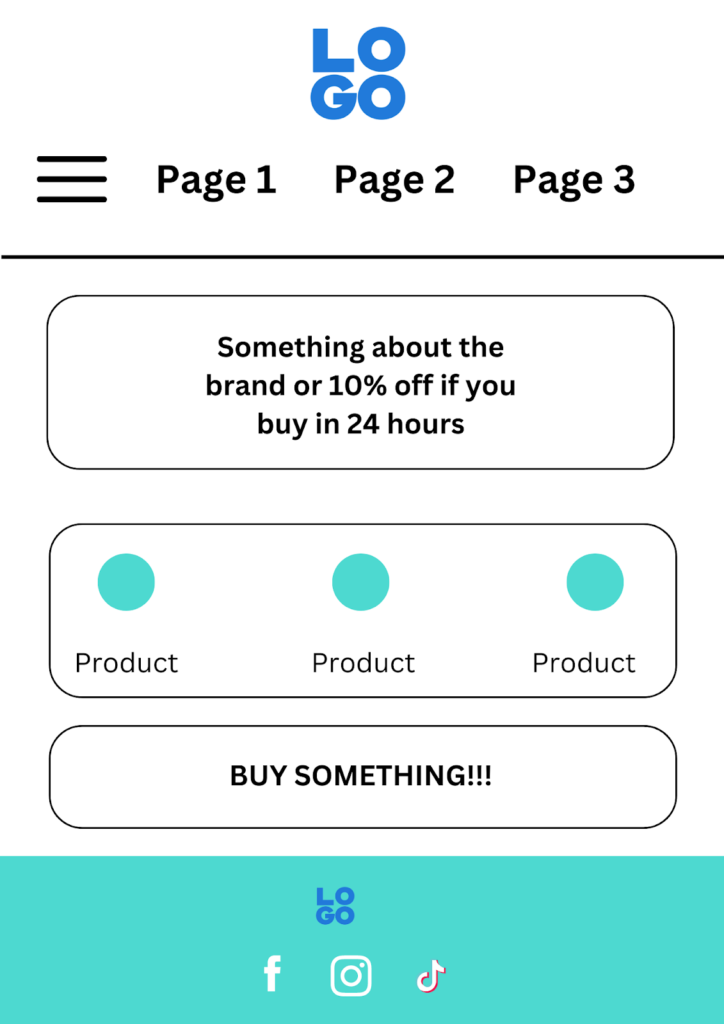
Your inbox is probably full of emails that fail to capture attention, let alone convince you to take action. I know mine is. However…
It’s not always easy to come up with copy that creates intrigue and drives conversions. But…
With the right approach and framework, you can create emails that prime readers to the click and take favorable actions.
Email Copywriting Tips for 2026 matter more than ever because nearly 400 billion emails are sent every single day worldwide, and your subscribers’ inboxes are full of most of them. People have gotten very good at spotting generic, templated copy and moving on in seconds.
Here are 5 tips that will instantly make you better at email copywriting. Well, not instantly. I wanted you to click on the blog (sorry!) but with a bit of practice, I’m sure, you’re gonna be cranking out high-converting emails like a caffeinated Hemingway.
Cut your email marketing bill by 67%
No limits on contacts. Pay only for what you use.
Write to a single person
When you write your sales email, don’t start with Google Docs or the template builder in your ESP. Do it from your Gmail composer. I’m not kidding!
Pick a contact who most resembles the group of people you’re sending your emails to. Write the emails as if you’re sending it to them.
This will force you to write emails that are personal. Michelle from Mississippi will feel like the email was written specifically for her; because it was.
Or, you could try this.
A new 2026 study reveals why it matters. Personalized emails are opened 29% more than generic ones. They also get 41% more click-through rates. Writing to a single real person is the simplest personalization tactic there is, and it costs nothing. Most email copywriting fails not because the offer is bad but because the email reads like it was written for a crowd.
Do more research than you actually need
You’ll probably need 5 times the research than what you plan on using.
Dive deep into your audience, their needs, pain points, and desires. Identify top 10 customers and look at their social media. Understand what excites them and what enrages them.
Next, find stories and stats that relate to your products. Use this to deliver that Disrupt (more on that later).
This research is what will help you find interesting angles and slants that will help come up with the single focus for your email. Speaking of focus…
Most copywriters skip the research and jump straight to writing. That is exactly why most emails sound the same. A subscriber who feels genuinely understood is far more likely to click. According to a new survey, 80.8% of consumers say content that feels personally relevant to their interests is a key factor in whether they open an email at all.
Write Single Threads
Every email needs a single point of focus. One idea. One problem. One solution. It’s called a single thread.
One of the most important things you need to do in your emails is not give people multiple options. Each line needs to tie in to the next and gradually prime the reader to the click.
And, that’s what holds the reader’s attention. Or else, the email is gonna pivot and it’s gonna be all over the place.
A single-thread email also makes the CTA feel like a natural conclusion rather than an ask. That is why emails with a single CTA see more clicks than those with multiple links competing for attention in 2026.
Use the DIC Framework
The Disrupt-Intrigue-Click Framework will help you craft emails that stand out in the inbox.
To quickly recap, this is what it means:
Disrupt: Anything that pattern-interrupts; something that can stop the mindless scrolling;
Your subject line and the opening sentences are essentially the Disrupt. You need to find an angle that can draw the reader’s attention. It can be fear, curiosity, excitement–anything that gives them an emotional tingle.
Intrigue: The next few lines need to keep the attention and satisfy their curiosity. Tell them what’s in it for them. Tell them how they can solve the specific problem outlined in the Disrupt.
Click: This is how you warm the reader to take a specific action. The entire single-thread leads to this crescendo.
The DIC framework works because it mirrors how people actually read and are easily distracted. You have about 10 seconds to earn the reader’s attention before they move on. Every line in your email needs to earn the next one. That is what the DIC framework forces you to do.
Sell indirectly
The email is not the best place to sell. That’s what your PDPs and landers are for. But…
That doesn’t mean you can’t sell on your emails; you just need to do it without the reader realizing they’re being sold to.
The purpose of an email, to me, is to drive the click. What can you do to fill the reader with curiosity and intrigue that they frantically search for the CTA?
Once they’re on your website, you can go full sales mode there. They expect to be sold something now.
Indirect selling works because 4.24% of email traffic leads to a purchase. It is far higher than search or social. The email does not need to close the sale. A well-placed click to the right product page does that job far better than a hard sell in the email body ever will. Get them to click and let your website do the rest.
Bonus: A couple of weeks back, Ben Milsom and I broke down an email and rewrote it. You can see how we use these tips in an actual email. I’m pretty sure you’ll find it useful.
Watch it here: Email Breakdown w/ Ben Milsom
That’s all for now, folks! I hope these tips will help you write 10X better emails.
The Bonus Tip: Read Your Email Out Loud Before You Send It
Seriously, do it. Read the whole email loud before you hit send. Every sentence. Every CTA.
If you stumble over a line, your subscriber will too. And unlike you, they will not try again. They will just close the email and move on.
In 2026, AI-generated content is flooding inboxes at a scale we have never seen before. Readers have developed a sharp instinct for spotting robotic, overly polished copy. Even if they cannot explain exactly why it feels off, it is still important to trust your instincts.
An email that sounds natural when read out loud is one that sounds human. That is the standard your email copywriting needs to hit.
A sentence that looks fine on screen often sounds completely unnatural when spoken. That gap is where you lose the reader. Read it out loud, fix the parts that feel stiff, and send the version that actually sounds like you.
Conclusion
Good email marketing copywriting in 2026 is not about clever tricks. It is about understanding your reader well enough to write something that feels like you made it for them.
The five tips above, including writing to a single person, doing deep research, keeping a single thread, using the DIC framework, and selling indirectly, all work toward the same goal.
They make your email feel human. Use them together consistently rather than picking and choosing. That consistency is what builds a list that actually opens, clicks, and buys.
If you want help writing email copy that converts for your store, our team is happy to take a look at what you have and help you improve it.
Cut your email marketing bill by 67%
No limits on contacts. Pay only for what you use.
FAQs
What are the best email copywriting tips for e-commerce brands in 2026?
Write to a single real person rather than a broad audience. Use the DIC framework to structure your email so every line pulls the reader toward the click. Keep one idea, one CTA, and one clear direction throughout the entire email.
What is the DIC framework in email copywriting?
DIC stands for Disrupt, Intrigue, and Click. The Disrupt grabs attention with an unexpected angle or emotional hook. The Intrigue keeps the reader engaged by showing them what is in it for them. The Click is the natural conclusion that follows when both of the first two steps land correctly.
How do you write email copy that drives clicks?
Focus on one idea per email and make sure every line connects to the next. Fill the reader with enough curiosity that they go looking for the CTA rather than being pushed toward it. Research your audience deeply so the problem you lead with actually resonates with the person reading it.
How long should a marketing email be?
Long enough to earn the click and short enough to keep the reader engaged. Most high-converting emails are between 50 and 200 words. The right length is whatever it takes to complete your single thread, no more and no less.