
Imagine this:
You’re vacationing in a beach town with your family; the kids are building sand castles; you’re sipping on your favorite drink, taking in the warmth of the sun slowly.
All this while, your email and SMS campaigns are running smoothly, bringing you more money, like clockwork!
This is what setting up automation flows for your email and SMS marketing can do to your business–save you a ton of time and make you a ton of $$$–even when you’re sleeping, making you money on autopilot.
In 2026, marketing automation flows are no longer an optional thing to have. They are the baseline for every e-commerce brand now. Ecommerce brands using automated email and SMS flows earn up to 320% more revenue per subscriber than brands that rely on manual campaign sends alone. If your competitors have these flows running and you do not, you are already playing catch-up.
I don’t wanna really talk about what automation flows are or why you need to use them or bore you with some stats. There are so many good blogs about it already.
Let’s get into the juicy stuff without wasting any more time. Lots of ground to cover.
Note: This is gonna be a series of blog posts where we’ll explore each flow in detail, along with ready-to-use templates, and some kick-ass examples. I’ll add the links here as soon as I write them.
1. Welcome new users
The Welcome Email is super important to engage new subscribers. Typically, it’s one of the emails with the highest open rate. It sets the tone for what’s about to come. Do it right and your subscribers are more likely to open your future emails.
Most people consider the welcome email to be purely transactional; I don’t. You need to introduce your brand, what you stand for, and why they should continue to engage with you. You can also add a discount coupon to incentivize them to make their first purchase.
Pro Tip: Ask a question and ask the new subscriber to reply to your email. This sends a signal to the email provider that you’re a trusted sender and ensures that your future emails don’t end up in SPAM HELL.
Most brands stop with one email. Don’t do that! Make it a sequence and send at least 4 emails in the welcome series. (I read about this guy who used a 26 email sequence. Madlad). Point is, send more emails, keep an eye on engagement, conversions, and unsubs (ouch!), experiment, and pull the plug on the low performers.
Your upcoming emails can tell your origin story, reviews, and FAQ, and even slide in a few products they can explore. Use your last email in the sequence to tell them that the coupon (yes, that one you sent in the first email) is expiring and let their FOMO do the rest of the work.
Welcome emails have an average open rate of 83.6%, which is far higher than any other email type you will send. However, in 2026, a single welcome email is simply not enough. A successful welcome sequence walks new subscribers through the brand story, product benefits, and social proof across multiple emails before asking for a sale.
- Abandoned Carts
If I could only set up one flow for a store, this would be it! This single flow alone can increase your revenue by 30%.
Now, I want you to think of the last time you didn’t go through with the purchase.
- Something else distracted you and you moved on to doing other things
- You felt you didn’t need the product at that point in time
- The shipping costs were high, or you were surprised by the additional costs incurred (taxes, packing, etc.)
- You found a better deal on another site
- You didn’t trust the vendor or unsure about the product’s quality
- Payment issues or lack of convenient payment options
We’ll not get into how to prevent cart abandonment here (I’ll write about it another day – Spoiler: Good design and usability) but rather how to create a high-converting abandoned cart sequence.
The first email is a gentle reminder to complete the purchase. Typically, a lot of brands add a discount as an incentive. Like this:
But, I find this common tactic very amusing. I’ll tell you why–trained shoppers abandon their carts just to trigger a discount. Your shoppers will figure this out after the first few purchases.
The first email scoops up all the buyers who don’t need an incentive to buy–the ones who had the intention to buy but got distracted.
This is a better example:
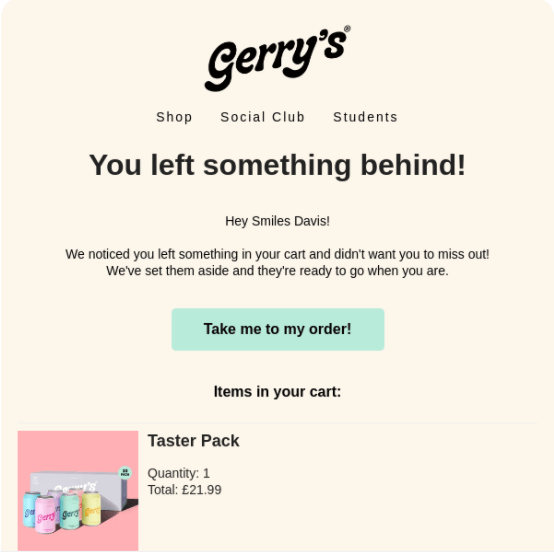
Use emails #2 and #3 to establish the why, reiterating the benefits, showing proof and reviews, and answering objections. You can also add the discount here, if you want.
Then, send them two more emails, telling them their discount is expiring soon.
Around 70.19% of shoppers who add something to their cart never actually check out. A well-built abandoned cart sequence helps you win a good chunk of that back.
3.Browse abandonments
It is quite similar to the abandoned cart flows except that the visitor has not expressed intent to purchase. We don’t know if someone clicked on the product by accident or were just casually browsing. There isn’t just enough context behind the visitors’ intent.
But, that won’t stop us from turning them into buyers, will it? Done thoughtfully and respectfully, this can bring in a ton of extra guac.
You set these up when someone browses through specific products and collections, send an exit-intent pop up and then retarget with emails and sms.
Its goal is quite simple–to remind them that they looked at an item. Perhaps, you can send more information about the product, specific features you wanna highlight, reviews, or that it’s selling out fast.
Pro Tip: You can also set these flows up based on different segments:
* Someone who’s never made a purchase
* One-time buyers
* Loyal Customers
* People who have visited the same product multiple times
Browse abandonment, welcome, and cart emails together account for 87% of all automated order revenue. Most brands focus all their energy on cart abandonment and forget about browse abandonment completely. That is a missed opportunity. A simple follow-up email reminding someone what they looked at costs nothing to send and can bring back buyers you would have otherwise lost.
4. Post-purchase
Anyone who’s made a purchase is one step closer to being a brand loyalist and is likely to purchase again from you. How do you make the most of this audience group?
Order Confirmation
As soon as they place an order, send an email confirming that their order has been placed along with the expected delivery date. Thank them for their purchase. Ask them to check out related products for a lil’ cross-sell.
Pro Tip: Incentive a second purchase with some hot discounts
The ideal email has an order summary, product information, shipping details, and a tracking link. You can also add a contact button or phone number–that instills a lot of confidence, especially for first-time buyers.
You can also add SMS to your flow to notify the buyers on the fulfillment progress. Personally, I prefer one order confirmation email and the rest through SMS.
Educational Flows
If you’re in the food, skincare, or health & fitness industries, this one’s for you.
For best results, make sure this email coincides with the day the order gets delivered. That way, they use the product right away. Show them how to use time and ways to get better results. Show them how others are using it and what results your product has produced for them.
Let’s say you sell skincare products, for example. Make your content in such a way it gives them a new routine. Tell them how to store it, how much to apply, and when they can expect results.
Reviews and referrals
A couple of days after the order’s been delivered, send out a review/feedback email. You can also send them a coupon code once they’ve reviewed, giving you another opportunity to make a sale.
I’ve also seen a lot of brands that ask for feedback. Use a simple Google Form (or Typeform and similar tools, if you’re fancy like that) to send a short survey asking about their experience.
A friend of mine usually sends an NPS survey (with a single question asking if they would refer the product to a friend or not, on a scale of 1-10). They only send the review request to folks that gave a 9 or 10 on the survey.
Pro Tip: Post-purchase flows are one of the most underused flows in e-commerce in 2026. Most brands set up order confirmation and stop there. But a buyer who just had a positive experience is the easiest person to sell to again. Automated post-purchase flows generate up to 30x more revenue per recipient than regular one-time email campaigns, so the follow-up is always worth it.
5. Upsell/cross-sell
Your existing customers are 10x more likely to purchase than a new customer. This is the flow that’s gonna help you make the most out of your existing customer base by increasing your LTC:CAC.
Try this once you finish reading this piece: Group all your products into major themes and put them together as a list. Now, duplicate this and place it side by side with the first list and map the ones that are complementary and go well together.
It should look something like this (Pardon my bad canva diagram; yours will look way better)
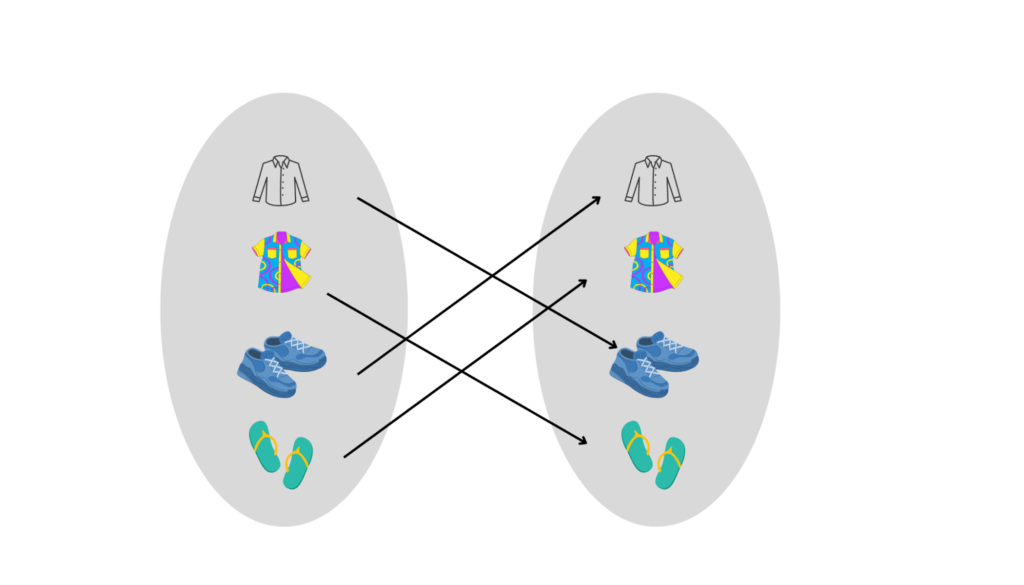
Now you know what products can be cross-sold with what. Create flows for your top 5 products and collections to keep it simple.
Cross-selling alone contributes 10-30% of total e-commerce revenue for most online stores. Most brands leave that money on the table because they never map out which products go well together. Start with your top five products and build a simple flow around each one. You will be surprised how much extra revenue comes from customers who were already going to buy from you anyway.
6. Win-back
Every business faces the risk of churn. It’s tragically poetic like breakups are.
They fall in love with your brand, they buy frequently, and then suddenly, one not-so-fine day, they stop caring. You’re not in their minds anymore; maybe they found some other brand exciting; maybe they moved to a different city; maybe you two weren’t the right fit anymore.
(Sorry, if I got you thinking about your ex, btw!)
If you’re not focusing on retention, you’re losing serious $$$ on the table. But, win-backs are tricky. When do you send it and how do you know if someone is at the risk of churning or has already churned?
Short Answer: It depends.
Long Answer:
Arriving at an answer that works for you involves a lot of variables–depending on your industry, the kind of products you sell, recent interactions–including email opens, visits, and purchases, and the typical buying cycle.
Answer this: How frequently do people buy from you? 1 months? 3 months? 15 days?
A store that sells polynesian clothes might have lower frequency than one that sells a month’s supply of supplements.
This is how I’d define disengaged customers. Those who haven’t:
- Bought anything in the last X days (90-180 is the gold standard if you’re not sure of your buying cycle)
- Visited your store in X days
- Opened your last 5 emails.
You could also create an RFM Matrix and segment your at-risk customers into multiple segments based on order value and number of purchases.
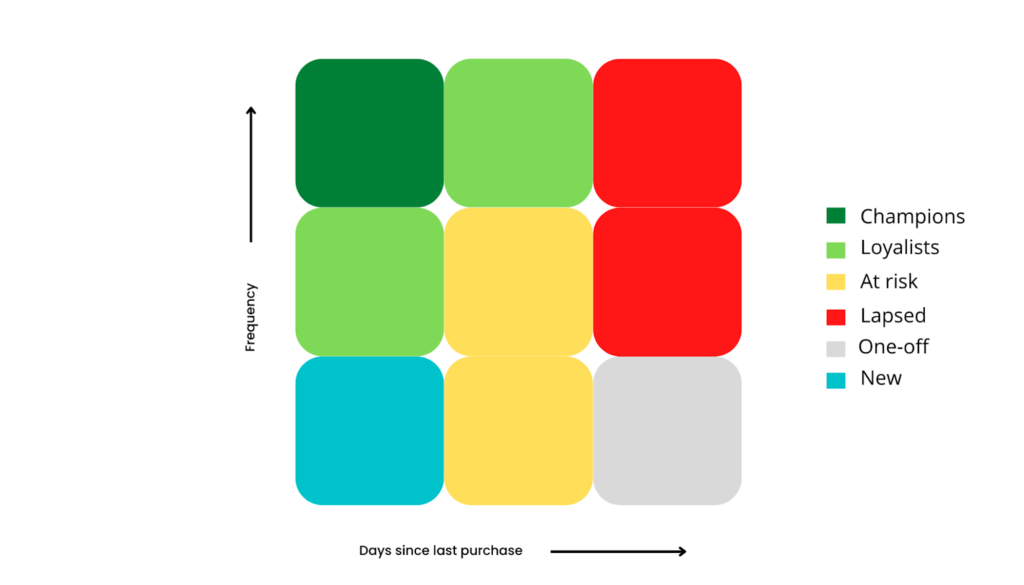
Sometimes a discount and a “miss you” email is all it takes to bring them back on board. As for the others, you need to be a bit more creative and give them a compelling reason to come back.
Repeat customers are easy to overlook when you are busy chasing new ones. But data from over 12,000 ecommerce stores shows that repeat customers make up just 21% of a store’s customer base yet drive 44% of its total revenue. A win-back flow helps you hold onto that group before they disappear forever.
There you go! Set these up right now.
How to Prioritize Which Flows to Set Up First
If you are just starting out, do not try to set up all six flows at once. Start with the welcome flow and the abandoned cart flow. These two alone will recover lost revenue and bring in new buyers from day one.
Once those are running well, add the post-purchase and upsell flows to get more value from buyers you already have. Win-back and browse abandonment flows can come after that.
One flow that is set up properly and running every day will always beat five flows that are half-built and inconsistent. Get the basics right first, then layer in the rest as your store grows.
Conclusion
Marketing automation flows are the closest thing to a revenue engine that runs on its own. You set them up once, and they keep working in the background whether you are at your desk or not.
In 2026, brands that have these six flows in place will keep pulling ahead of those that still rely on sending manual campaigns. The gap between the two is only going to grow.
Start with one flow today. Get it right, watch it work, then build the next one. You do not need all six running at once to see results. You just need to start.
If you want help building these flows or figuring out where to begin, our team is happy to take a look at your setup and point you in the right direction.
FAQs
What are the most important marketing automation flows for ecommerce brands in 2026?
The welcome flow and abandoned cart flow are the two most important ones to start with. These two alone cover the biggest revenue opportunities for any ecommerce store. Once those are running, you can layer in post-purchase, upsell, browse abandonment, and win-back flows to cover the rest of the customer journey.
How do abandoned cart flows increase ecommerce revenue?
Around 70.19% of shoppers leave without completing their purchase. An abandoned cart flow sends them a timely reminder that brings a portion of those shoppers back. A sequence of two to three emails works much better than sending just one.
What is a win-back flow and when should you use it?
A win-back flow is a series of emails sent to customers who stopped engaging with your brand. A good starting point is to trigger it when someone has not purchased in 90 to 180 days. The goal is to give them a reason to come back before they move on for good.
How many emails should be in a welcome automation sequence?
Most brands send just one welcome email, but a sequence of at least four works much better. Start with a brand introduction and a discount, follow up with your story and reviews, and close with a reminder that the discount is about to expire.