
If you’ve ever felt lost in the labyrinth of CTRs, segments, campaigns, fear not! We’re here to guide you through the email marketing maze, armed with the most powerful weapon of all: memes.
I’m not going to bore you with lengthy explanations and dry definitions, because the great Albert Einstein once said, “Man, memes are funny, innit?”.
We’re taking the polar express route through the meme-filled shortcut of humor and wit. So buckle up and hold on tight, cause the power of memes is said to be over 9000.
Get ready to LMAO your way to email marketing mastery!
Email marketing jargon has only grown more complex in 2026. Terms like zero-party data, AI-powered segmentation, and predictive sending are now common in marketing teams.
Before you dive into these, focus on the fundamentals. A clear grasp of email marketing metrics and core concepts separates brands that get real results from those that just send emails and hope for the best.
Segmentation
Segmentation is when you divide your email list into different segments based on different criteria. For example, segmenting readers who’ve opened your emails in the past 30 days.
By segmenting your audience, you can send relevant messages to relevant segments. It helps you deliver value across the entire list, be it through campaigns or automations.
Me sending out campaigns to specific segments:
You definitely don’t want to be someone who does this:
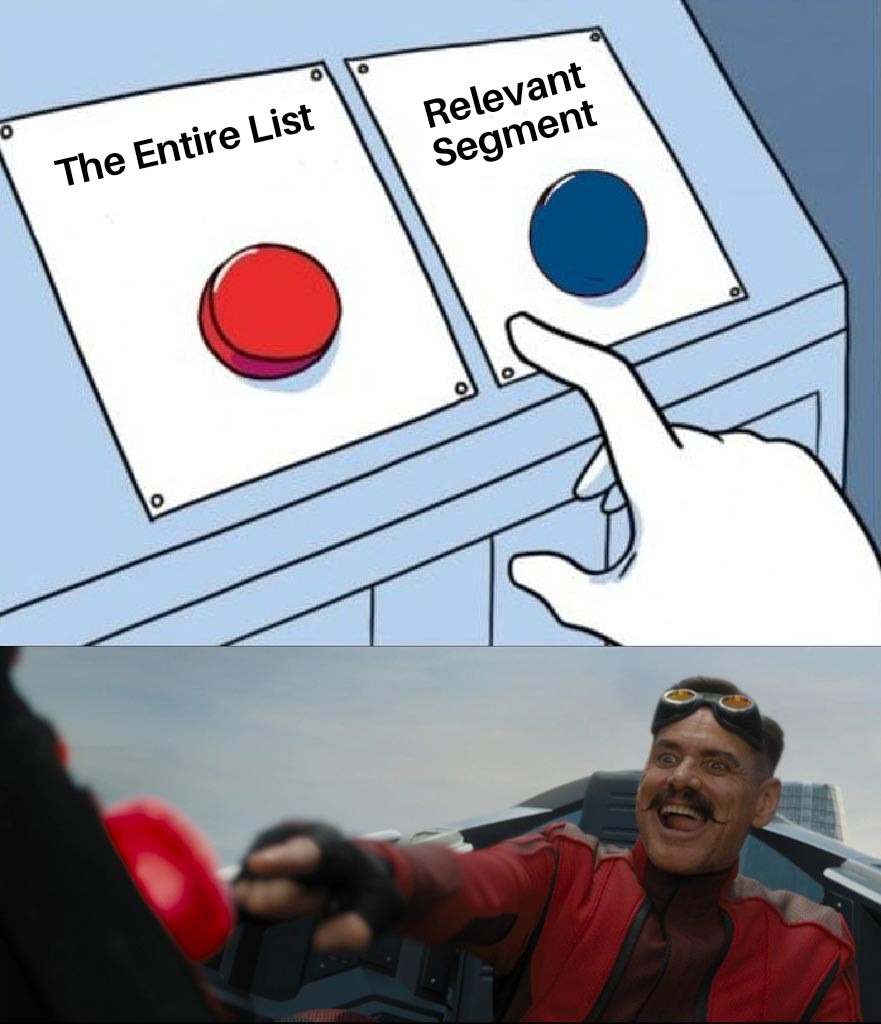
Imagine you just bought a hair serum from a skincare brand, and they send you tips on using their sunscreen. Sure, you could ignore it once or twice, but regularly receiving irrelevant content can easily convince anyone to unsubscribe from them.
For a deep dive into segmentation, check out our A-Z Guide on Customer Segmentation.
Email marketing segmentation is not optional anymore. According to recent data, marketers who segment their lists see a 760% increase in email revenue. That number is not a typo. Sending the right email to the right person is genuinely that powerful.
Campaigns
Campaigns are the emails you send out manually. You select the date and time at which it goes live. For example, sending out Valentine’s Day campaign on February 13th 5:00 PM.

Manual campaigns still account for a huge chunk of email sends in 2026. They work best when tied to a specific moment, such as a holiday, a product launch, or a sale. The key is to plan them far enough in advance that your copy and design do not feel rushed. A rushed campaign email is painfully obvious to the person reading it.
Automations
Automations are automatic emails that go out upon a specific trigger you set up. For example, when a consumer leaves a checkout without purchasing, they receive an “abandoned checkout” email after 2 hours.
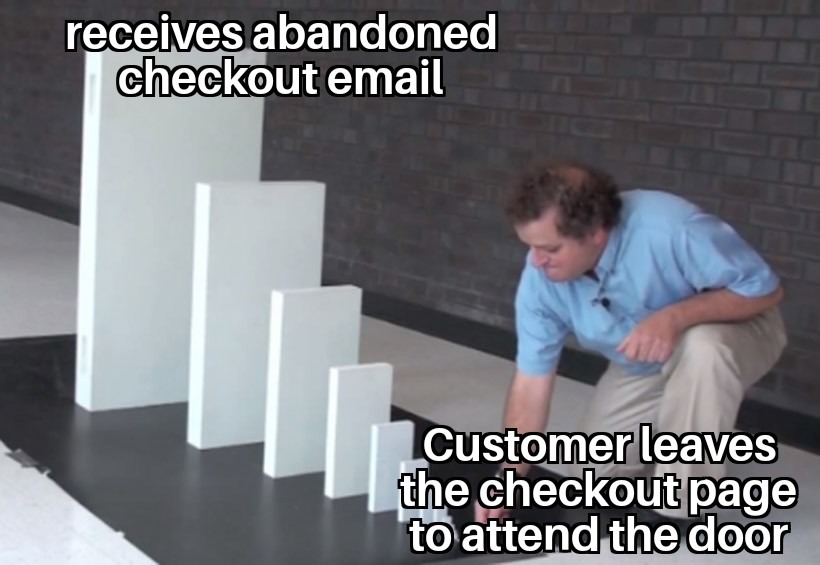
Automated emails generate 320% more revenue than non-automated ones. And they make up just 2% of total email volume. So you are doing a fraction of the work and getting three times the result. If that is not a good reason to set up your automations in 2026, honestly, what are you waiting for?
Subject lines
Subject line is like the door to an email, so make it look intriguing and drive people to open it. But, don’t sound too clickbaity to create curiosity, it can backfire and make people unsubscribe from your list.
Another factor to consider are filters that Inbox Providers use. They have a list of words that they scan for to detect potential spam emails.
For example, using all caps, lot of exclamation marks, excessive use of certain words like “Free”, “Low Price”, etc., can trigger the ISP filters.
Good email subject line tips are timeless, but the stakes are higher in 2026. Personalized subject lines increase open rates by 26% on average. On the flip side, spammy subject lines do not just get ignored, they tank your sender reputation. One bad subject line can hurt your deliverability for weeks.
Metrics
There are many metrics that you can track from the ESP you’re using but I’m gonna focus on open rate, click-through rate and bounce rate.
Open rate is pretty simple, it tells you how many people have opened your email.
Click-through rate tells you how many links have been clicked in the email. Usually, CTR tends to be lower than the open rate.

Bounce rate tells you how many emails were not delivered. One of the reasons for a bouncing email could be an invalid email address, so it’s important to clean your email list every once in a while
Email when it reaches an invalid email address:
Email marketing metrics tell you the real story behind your campaigns. The average click-through rate across industries sits at around 2 to 3% in 2026. If you are consistently below that, your email body is the problem. If your open rate is low, your subject line is the problem. Track them both separately, and you will always know exactly what to fix.
Deliverability
Deliverability means how many of your emails has actually reached the inbox vs the spam folder. Now, this is not decided through a coin flip, but rather after your email goes through various authentication checks and spam filters.
So basically, email service providers and inbox service providers have protection layers to ensure the safety of their users and to prevent them from being bombarded with spam emails. All legitimate emails go through the protection layers before reaching the inbox.
It’s a different case for imposter and spam emails as they are sent to roam the spam folder abyss for eternity.
Usually, when people start engaging with your emails, it’s a sign for the Inbox Providers that you’re trustable. To have a list of engaging subscribers, place a double opt-in process, so that you know these subscribers actually want to receive emails from you.
Deliverability is the one email marketing metric that controls all other metrics. Studies show that 1 in 6 marketing emails never even reach the inbox in 2026.
You could write the best email in the world, and it would not matter if it lands in spam. Set up SPF, DKIM, and DMARC authentication. Clean your list regularly. Those two steps alone solve most deliverability problems.
Interested more about deliverability? Check out our 11 tips to maximize email deliverability
I hope you enjoyed these memes as much as I enjoyed making them. Check out our other blogs to learn more about how your DTC brand can benefit from email and SMS marketing.
3 More Email Marketing Terms You Need to Know in 2026
Okay, so the OG terms are covered. But the email marketing memes did not stop evolving. Here are three terms that have become impossible to ignore in 2026.
Zero-Party Data
Zero-party data is information a subscriber willingly shares with your brand. It includes things like their preferences, goals, and shopping habits. Usually, it comes through a quiz or survey, because apparently, people love telling brands about themselves.
No tracking. No guessing. They just tell you what they want.
(Insert relevant meme here)
Why does this matter? With third-party cookies going the way of the dinosaur, zero-party data is now one of the most valuable things you can collect. A subscriber who tells you they have oily skin and are looking for a serum under $30 is basically handing you a perfectly targeted email on a silver platter.
AI-Powered Personalization
AI-powered personalization means using machine learning to figure out the right product, the right message, and the right send time for each individual subscriber automatically.
(Insert relevant meme here)
Marketers using AI-driven personalization have seen revenue jump by 41% and click-through rates increase by 13.44%.
In 2026, this is not a futuristic feature. It is already built into most major email platforms. If you are not using it, you are leaving both money and relevance on the table.
Sunset Flow
A sunset flow is an automated sequence sent to subscribers who have gone completely quiet. No opens, no clicks, nothing. The goal is to give them one last chance to re-engage before you remove them from the list.
(Insert relevant meme here)
Sounds brutal. But keeping unengaged subscribers around is actually worse for your deliverability than removing them. Dead weight on your list drags down your open rates and can even get you flagged as spam. A good sunset flow saves your sender reputation and keeps your email marketing metrics healthy.
Conclusion
Email marketing does not have to be intimidating. Once the core jargon clicks, the rest follows naturally. Segmentation, campaigns, automations, subject lines, metrics, and deliverability are all important components of our email marketing strategy.
These six terms make the foundation of every successful email marketing program in 2026. Get comfortable with these, and the newer stuff like zero-party data and AI personalization will make a lot more sense too.
If you want help putting any of this into practice for your store, our team is always happy to take a look at what you have got and help you get more out of it.
FAQs
What are the most important email marketing metrics to track in 2026?
Open rate, click-through rate, and bounce rate are the three core metrics to start with. Open rate tells you how well your subject lines are working. Click-through rate shows how engaging your email content is. Bounce rate Signals list hygiene problems that you need to fix before they damage your deliverability.
What is segmentation in email marketing?
Email marketing segmentation means dividing your subscriber list into smaller groups based on specific criteria like purchase history, location, or engagement level. Sending targeted emails to these groups means each subscriber gets content that is actually relevant to them. Segmented campaigns generate up to 760% more revenue than non-segmented ones.
What is the difference between a campaign and an automation in email marketing?
A campaign is a manually scheduled email sent at a specific date and time, like a Black Friday sale email. An automation is an email triggered by a specific subscriber action, like abandoning a cart. Automations run in the background without any manual effort and generate significantly more revenue per email than one-off campaigns.
How do you improve email deliverability?
Start with proper email authentication set up SPF, DKIM, and DMARC for your sending domain. Clean your list regularly by removing inactive and invalid addresses. Keep your spam complaint rate below 0.1% and avoid spam trigger words in your subject lines. These steps cover the majority of deliverability issues most brands face.